
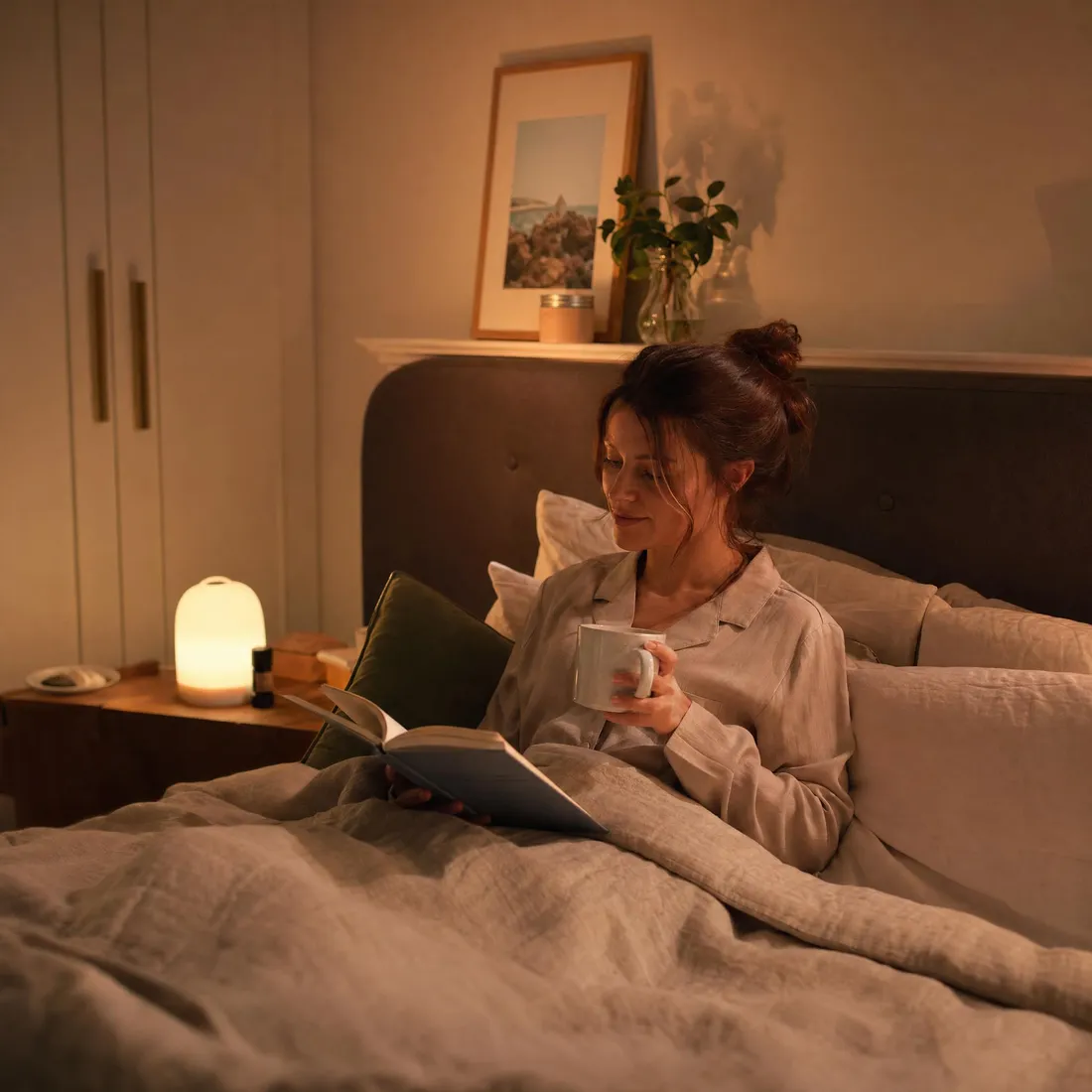
Sleep is built, not found. A better sleep routine comes from a handful of small habits, repeated until your body reads them as cues. This article covers the habits worth starting with, the everyday things that quietly undo them, and the point where sleep is worth raising with a practitioner.
Poor sleep is common here. A national survey of 1,011 Australian adults, published in the journal Sleep Health, found that inadequate sleep and its daytime effects affect 33% to 45% of adults (Adams et al., 2017).
What is a good sleep routine?
A good sleep routine is a set of repeated cues that tell your body the day is ending. It usually includes a steady wake time, morning daylight, a calm hour before bed, and a cool dark bedroom. Consistency does more work than any single habit inside it, which is why the routine matters more than the tips.
How do you build a better sleep routine?
Start with one change and hold it for two weeks before adding another. Five in rough order of usefulness:
- Fix the wake time first. Same time every day, weekends included. The wake time anchors everything else, and it is easier to control than the time you fall asleep.
- Get light early. Daylight within an hour of waking, outdoors if you can manage it. Ten minutes counts.
- Give yourself a wind-down hour. Lower the lights, drop the volume in the house, and do something undemanding. A warm shower, a book, or a slow stretch all work.
- Make the bedroom boring. Cool, dark, quiet, and used for sleep. If the room is where you work and scroll, your body stops reading it as a cue.
- Get out of bed when you are awake. If you have been lying there frustrated for around twenty minutes, get up, sit somewhere dim, and do something dull until you feel sleepy. Lying in bed awake teaches your body that bed is a place for being awake.
That last one feels wrong the first few times. It is also the habit most people have never been told about.
What gets in the way of sleep?
Caffeine late in the day, alcohol close to bedtime, long afternoon naps, heavy meals at night, and screens in bed are the usual culprits. Work is another one. In the same Australian survey, 26% of adults reported using the internet most or every night just before bed alongside frequent sleep difficulty or daytime impairment.
You do not need to be strict about any of it. Change one, watch what happens for a fortnight, then decide whether it earned its place.
When is it worth talking to a practitioner about sleep?
Raise it when poor sleep has lasted more than a few weeks, when it is affecting your mood, work or driving, when you snore loudly and still wake unrefreshed, or when you are simply worried about it. A practitioner can take a proper sleep history and talk through what may be contributing.
What does a practitioner ask about sleep?
A sleep conversation is more structured than most people expect. Be ready for questions about:
- The times you get into bed, fall asleep, wake in the night, and get up.
- How long it takes you to fall asleep, and what you do when you cannot.
- Snoring, gasping, or anything a partner has noticed while you sleep.
- Daytime sleepiness, including whether you have ever felt drowsy at the wheel.
- Shift work, caffeine, alcohol, and the medicines you already take.
- Your mood, your stress, and anything else going on in your health.
You may be asked to keep a sleep diary for a week or two before the next appointment. It is tedious to fill in. It is also often the single most useful thing you bring.
What a video consultation can and cannot do about sleep
Telehealth is not suitable for all sleep concerns. A video consultation covers the history, the habits and the discussion. It cannot measure your breathing overnight. Where a practitioner suspects a sleep disorder such as sleep apnoea, the next step is usually a referral for a sleep study or an in-person assessment.
Other outcomes are advice, a period of monitoring, a review of what you already take, a referral to another doctor, or treatment where clinically appropriate. Sleep needs and responses differ from person to person, so individual results vary and what works for a friend may not suit you.
Next step: if sleep has been a problem for weeks, book a GP consultation by video and bring your sleep diary.
This article is general information only and is not a substitute for medical advice about your own situation. Individual results vary. We do not advertise specific prescription medicines to the public, in accordance with Australian regulatory requirements. If you have concerns about your sleep or your health, speak with a qualified practitioner. In an emergency, call 000.